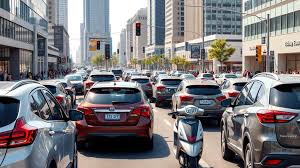
As India prepares for Diwali, the nation’s biggest festival and peak shopping season, consumer spending shows mixed signals this year. While car sales and e-commerce orders are on the rise, overall retail demand seems weaker than expected. The key question: Will this festival of lights bring prosperity for businesses or highlight economic slowdowns?
Mixed Festive Trends Across India
The weeks leading up to Diwali are typically a time of massive shopping—from cars and gold to home appliances and clothes. But this year, the data paints a divided picture.
India’s economy faces a mix of challenges: global trade slowdowns, U.S. tariff pressures, and reduced urban consumption. On the brighter side, tax cuts and lower levies on daily goods may boost overall spending.
According to industry data, automobile sales grew by 5.2% in September 2025, compared to a sharp 9% drop last year. Dealers say Navratri sales set new records, as recent tax cuts aligned perfectly with the festival period.
Luxury brands also reported strong performance. Mercedes-Benz India said it sold one car every six minutes during Navratri, signaling renewed buyer confidence. Similarly, Amazon India recorded over 380 million visits in the first two days of its festive sale — with 70% of traffic from smaller cities.
Market analysts at Redseer Consulting project 2025 as the best year for online sales in the last five years. However, some retail categories continue to face slow demand.
Gold and Silver Sales Slow as Prices Soar
Traditionally, Diwali sparks a rush for gold and silver purchases, but this year high prices have cooled the trend.
Dealers report steady but lower-than-usual sales volumes. Ambit Institutional Equities noted that while festive spending remains a growth driver, this year’s economic uncertainty and wage stagnation may limit household budgets.
Analysts expect spending momentum to shift toward smaller towns and rural areas, driven by better agricultural performance and rising rural wages.
According to Citibank, rural incomes are at an eight-year high, with 10% growth in non-farm jobs helping sustain demand outside big cities.
Urban Consumption Hit by U.S. Policy and IT Sector Weakness
Urban demand, especially in India’s tech-driven economy, remains under strain.
Analysts from Citi and Ambit highlight low wage growth (around 8%) in listed non-financial companies, below the long-term average of 11%.
The IT sector, heavily exposed to U.S. economic uncertainty, is seeing slower hiring and salary growth, impacting urban consumption directly.
September’s data shows lower air travel, reduced hotel occupancy, and a dip in manufacturing and service PMI. Even personal loan growth, which typically spikes during Diwali, has weakened compared to last year.
Still, economists believe lower interest rates and recent tax cuts could stimulate spending in the coming months. The key uncertainty lies in how much of this stimulus will translate into actual consumption versus savings.
Surge in Silver ETFs Reflects Investor Shift
While consumers are buying less gold, investors are moving strongly into silver and gold ETFs.
In September, ETF inflows hit record highs, driven by rising prices and metal shortages.
Several Indian fund houses temporarily suspended bulk silver purchases because of limited physical supply — a short-term issue expected to normalize soon.
Fintech Event Highlights India’s Focus on Real-Time Payments
At India’s annual Global Fintech Fest, which featured leaders from both India and the U.K., discussions avoided cryptocurrency and stablecoins, despite global growth in the sector.
Organizers encouraged speakers to stay clear of political and crypto debates, focusing instead on India’s progress with digital payments.
India continues to expand its Unified Payments Interface (UPI), now enhanced with biometric authentication, positioning itself as a global leader in real-time transactions.
Meanwhile, cryptocurrencies remain volatile, reinforcing India’s cautious stance toward digital assets.
Outlook: Rural Resilience, Urban Uncertainty
India’s festive economy this year reflects a divided recovery — rural demand remains solid, but urban growth is still lagging.
With tax cuts, wage improvements, and e-commerce expansion, there are signs of optimism. However, much depends on how urban employment and consumer confidence recover after Diwali.